
Utah Recent Arrests Search
Utah Recent Arrests are tracked by county sheriffs, local police, the Utah Bureau of Criminal Identification, and the state court system. You can search Utah Recent Arrests through jail booking rosters, the statewide warrant tool, and the Utah Courts XChange case search. Most county sheriffs post a current jail roster online. The state BCI also keeps a central criminal history file. This page shows you how to find Utah Recent Arrests, who holds the records, and what the law says about public access.
Utah Recent Arrests Quick Facts
Utah BCI and Recent Arrests
The Utah Bureau of Criminal Identification is the state repository for Utah Recent Arrests data. BCI sits inside the Utah Department of Public Safety. It holds arrest records, court case outcomes, and other rap sheet data sent in by police and sheriffs across the state. You can ask BCI for a copy of your own record. The fee is $15. You pay in cash, check, money order, or card. Mail requests go to 3888 West 5400 South, Salt Lake City, Utah 84129. You can call BCI at 801-965-4445.
Under the Criminal Identification Act, rap sheet data from BCI is not open to the general public. The law at Utah Code § 53-10-108 limits who can see the file. Criminal justice agencies get full access. Other groups need a signed waiver from the person. Employers who qualify can ask for a report with a written release. You can read more on the BCI site linked below.
For a look at the official BCI criminal history page, visit the Utah Bureau of Criminal Identification site. The page lists all the steps to ask for your record.
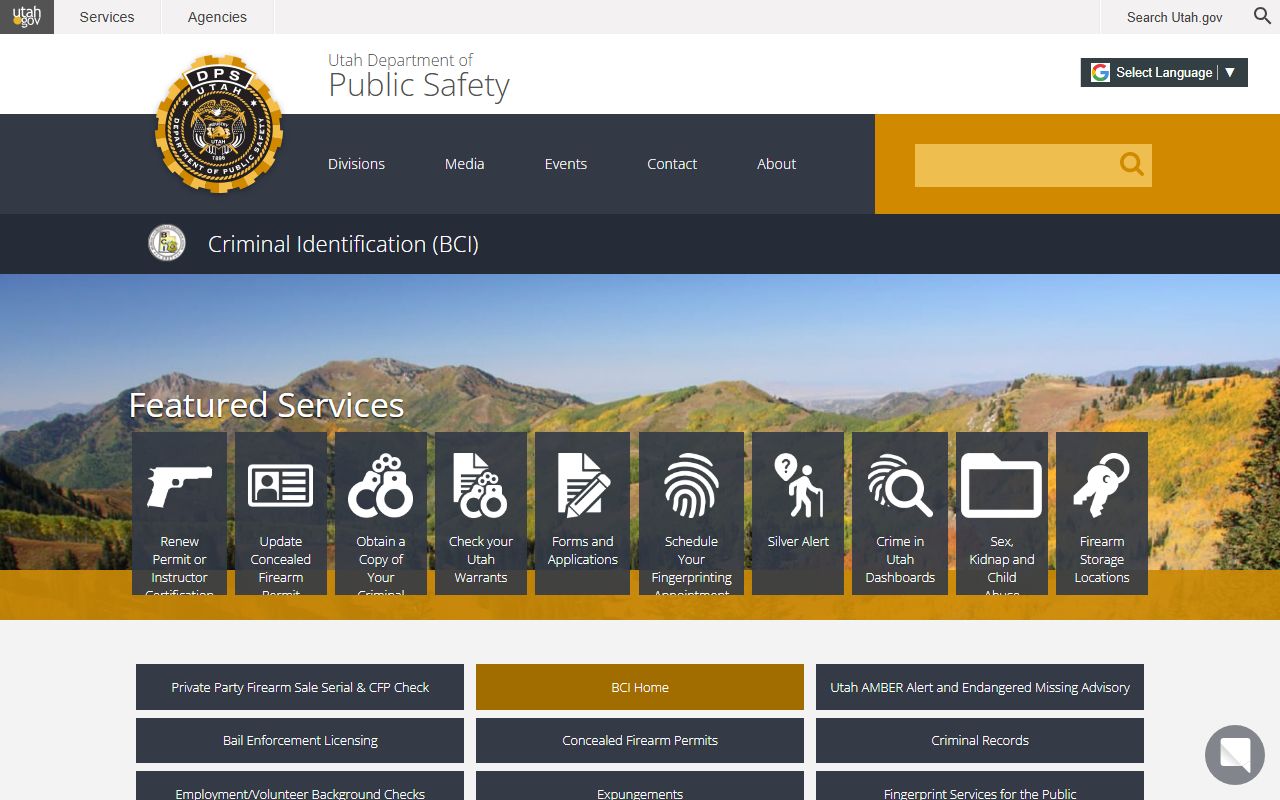
The BCI page covers fees, ID rules, and how to send in forms by mail or in person.
Note: BCI will not release records that have been expunged, and a person with an expunged record may deny that it ever existed.
Statewide Warrant Search
Utah Recent Arrests often start with a warrant. BCI runs a free statewide warrant search tool at secure.utah.gov. You type in a first and last name. The site pulls back a list of active warrants. Click view to see the case number, the court, and the charge. The database is fed by the state courts, so it stays current.
Under Utah law, an arrest warrant is a public record once it has been served. A court can hold back a warrant before service under Utah Code § 63G-2-301. This keeps the suspect from learning about the warrant and running. After service, the warrant joins the pool of Utah Recent Arrests data that anyone can look up.
Many county sheriffs also post their own most-wanted lists. If you cannot find a name on the state tool, check the local sheriff page for the county where the person lives. Some cities post a weekly blotter as well.
Utah Courts XChange Case Search
Utah State Courts run a case search tool called XChange. It is the main way to find court filings tied to Utah Recent Arrests. The site has felony, misdemeanor, and infraction cases from the District Courts back to 1996. Justice Court cases go back to July 2011. You need an account to use XChange, and some searches cost a fee. A few basic lookups are free. Go to the utcourts.gov case info page to sign up.
XChange pulls data from the Administrative Office of the Courts. Records get updated each month for most files. Disposition data is often updated each week. The tool shows case parties, charges, judge names, hearing dates, and case status. Some juvenile files are sealed and will not show up. The same goes for some sensitive records.
The Utah Courts also let you walk into any District Court Clerk office and look at paper files for free. Bring a photo ID. Ask the clerk to pull the case by name or number. You can read the file in the lobby. Copies cost a small fee per page. This in-person route works well if you know the court that handled the case.
Utah DOC Offender Search
The Utah Department of Corrections runs an offender search for people in state prison or on state parole. This tool is not the same as a county jail roster. It shows inmates who got a prison sentence of more than one year. You get the custody status, the facility name, and the offense. The file is updated about every two months.
For most Utah Recent Arrests, the person goes first to a county jail, not state prison. That means you should start with the local sheriff roster. If the case moved on to a prison term, then check the DOC site. Family and friends can use the DOC family resource page to learn visiting rules.
GRAMA Public Records Law
Utah Recent Arrests fall under the Government Records Access and Management Act, known as GRAMA. The law is in Utah Code § 63G-2. GRAMA took effect in 1991. It is the state version of the federal FOIA law. Under GRAMA, all records are public unless a statute says otherwise. That is the rule at Utah Code Section 63G-2-201(2). A jail booking photo is public. An arrest log is public. Some police files are held back as protected while a case is open.
You ask for records by sending a written request to the office that holds the file. The office has 10 business days to reply. It can grant the request, deny it, or ask for more time. Fees are allowed to cover staff time and copy cost. Most sheriffs charge by the page. The state Utah Open Records Portal lets you file a GRAMA request with a state agency online. The portal tracks your case from start to end.
Read the full GRAMA statute on the state legislature site linked here: GRAMA Title 63G Chapter 2.
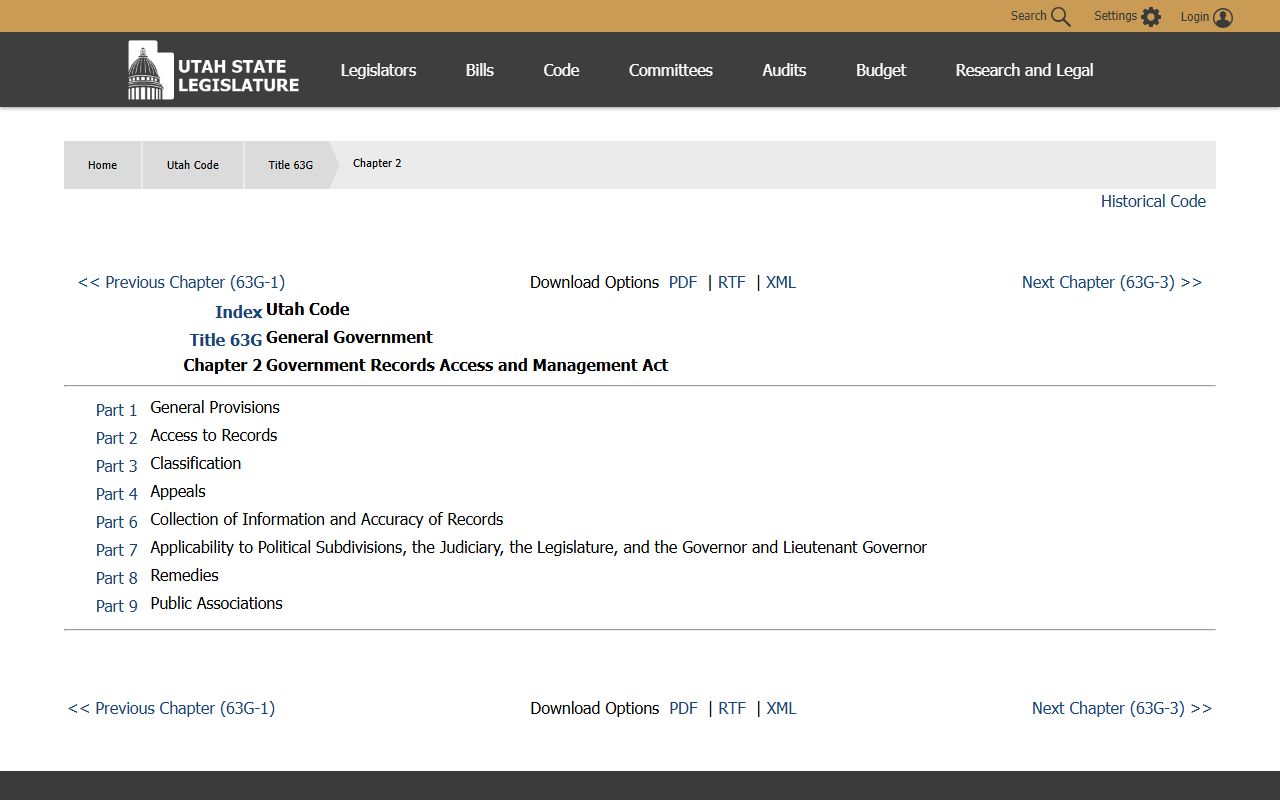
The page lays out what is public, what is private, and who gets to see controlled or protected files.
Note: GRAMA favors public access when two interests weigh the same, but your request must name the record with reasonable specificity.
Local Police Records Requests
City police departments handle a large share of Utah Recent Arrests. Each one has its own GRAMA process. Salt Lake City Police charge $15 per report up to 50 pages, then 25 cents per page. Body cam video costs $33. You file in person at the Public Safety Building at 475 South 300 East, Salt Lake City. The records desk is open Monday to Friday, noon to 4 p.m. Bring a photo ID and a check made out to Salt Lake City Corporation. See the full list of rules at the SLCPD GRAMA page.
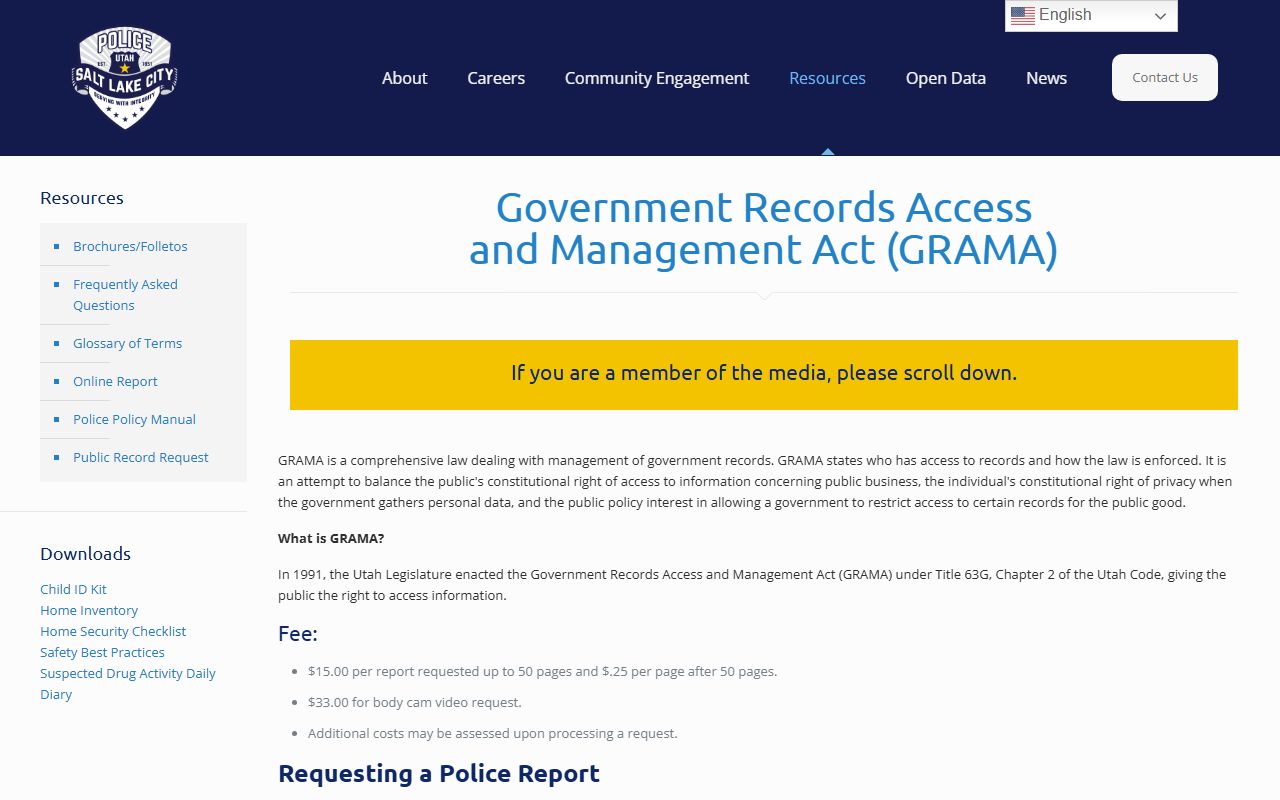
The SLCPD page also lists what types of ID the desk will take and which ones it will not.
St. George Police use a web portal for records. The FAQ page walks you through the steps. If you are the subject of the report, such as a victim or the arrestee, you may see data that the general public cannot. Read the full list of rules at the St. George Police GRAMA FAQ.
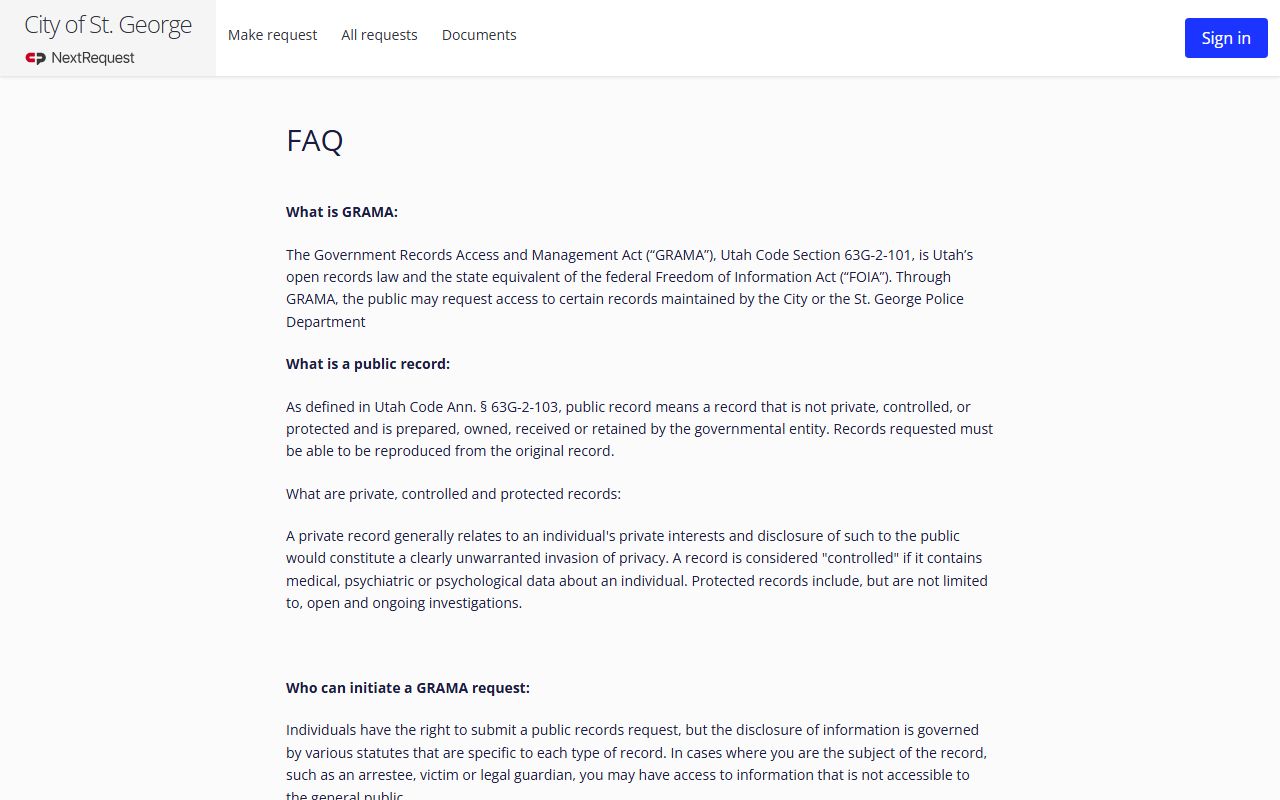
The FAQ covers fees, wait time, and the kinds of files that stay private.
Park City Police post their records request steps on the city site. The page points out that some items are not records under GRAMA, like notes and drafts. See the full info at Park City Police Records.
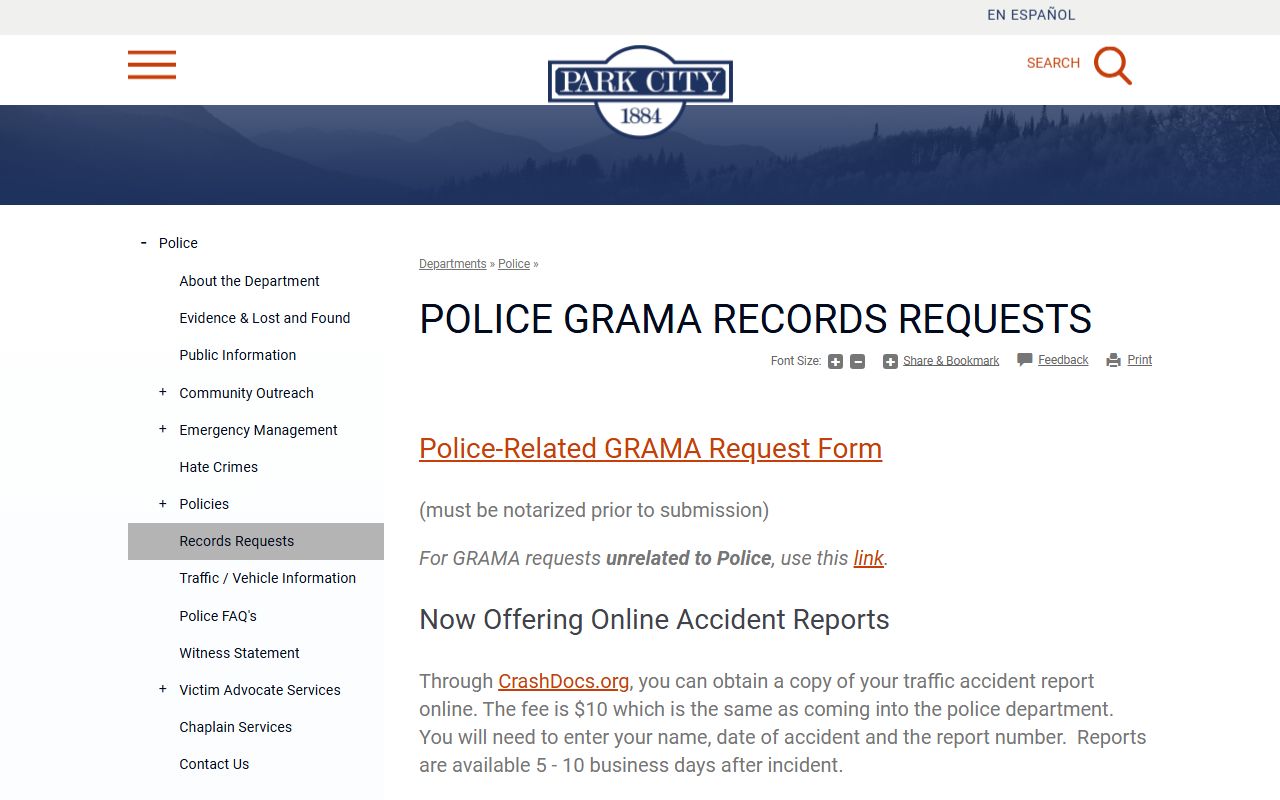
Park City spells out how to write a request so the clerk can find the file fast.
Provo City uses a formal policy for all GRAMA requests. Records officers must sort each file as public, private, controlled, or protected. The Provo policy is set out at Provo Policy 7040.
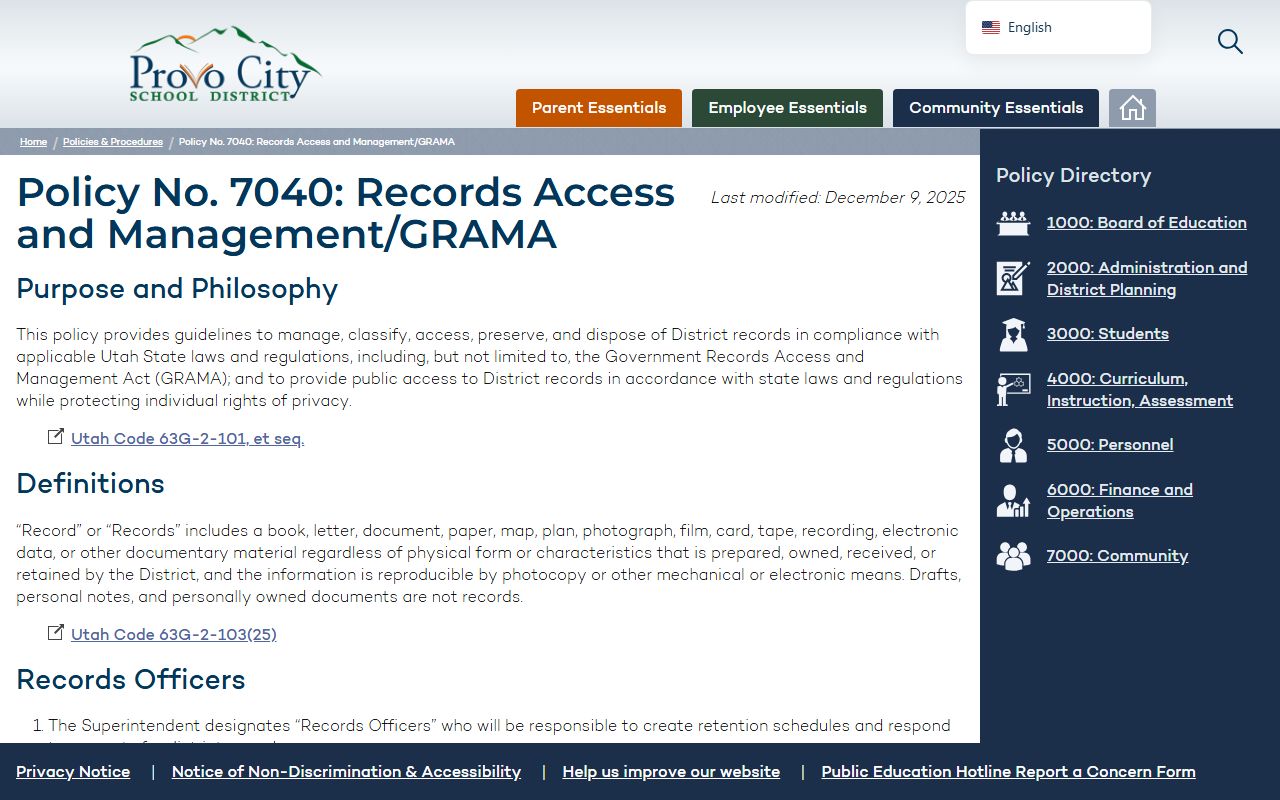
The Provo page lists each code section that guides the review of a request.
County Sheriff Jail Rosters
The fastest place to find Utah Recent Arrests is the county sheriff. Every county in Utah has a sheriff and a jail. Most post a current inmate roster on the sheriff website. The roster shows the name, the booking date, the charge, and the bond. Some list a mugshot. The data is classified under GRAMA. Public items stay open. Private items get masked.
Sheriffs book people in for city and county arrests alike. A police officer in Provo will take the arrestee to the Utah County jail. The booking goes on the county roster. The case may then move to the local District Court. That means you may need to check both the county jail roster and the court case search to get the full story.
Each county clerk also keeps some records under Utah Code § 17-22-2, which sets the sheriff duties for prisoners and record keeping. Some small counties post only a weekly list. Others run a real-time roster that updates every few hours.
How to Search Utah Recent Arrests
Start with the county where the arrest took place. If you do not know the county, use the statewide warrant tool from BCI. If the case has gone to court, try XChange. If it is an old case, the state archives may hold it.
You need a few facts to get good results. A full legal name helps the most. A date of birth narrows the list. The county or city gives you the right office to call. The case number is gold if you have it. Without a case number, the clerk may ask you to pay per search.
Some folks try third party sites for Utah Recent Arrests. These sites pull from the same public data. They can be faster to use but may have old info. Always check the official source to confirm what you find.
Expungement of Arrest Records
Utah lets some people clear their arrest files. BCI runs the expungement program. The page at BCI Expungements has the steps. Once a record is expunged, BCI pulls it out of the public file. It lands in a sealed database. Only a short list of agencies can see it. These include the state licensing board and law enforcement.
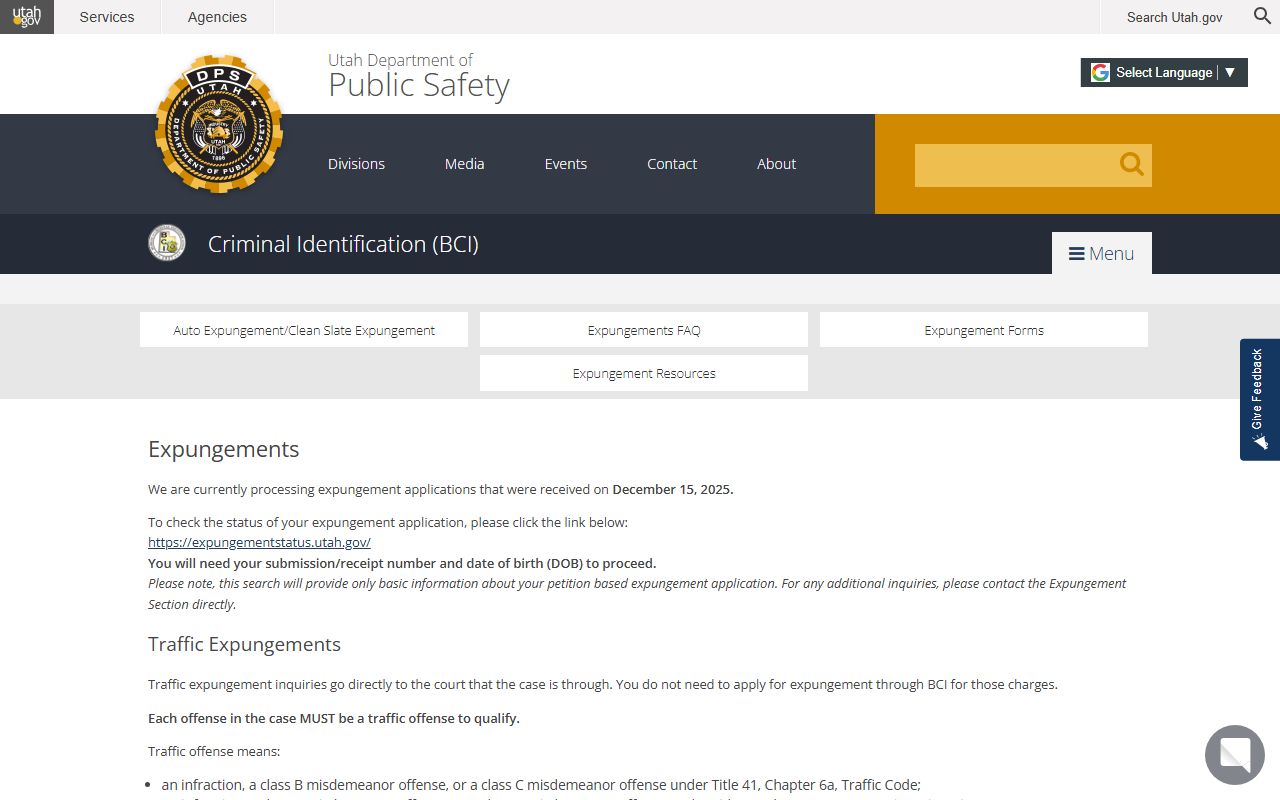
The BCI page shows who qualifies and what forms to file with the state court.
A person with an expunged case can say, under oath, that the case never happened. That rule is in state law. It lets someone move past an old arrest. The case does not show up on most background checks.
Note: Expungement does not erase federal records, so a federal agency may still see the old arrest.
Utah State Archives Records
Old Utah Recent Arrests data often ends up at the Utah State Archives. The archive sets the rules for how long each agency must keep a file. It also helps records officers learn GRAMA. You can visit the archive at 346 S. Rio Grande St, Salt Lake City, UT 84101. The phone is (801) 531-3863. See the full site at Utah State Archives Records Management.
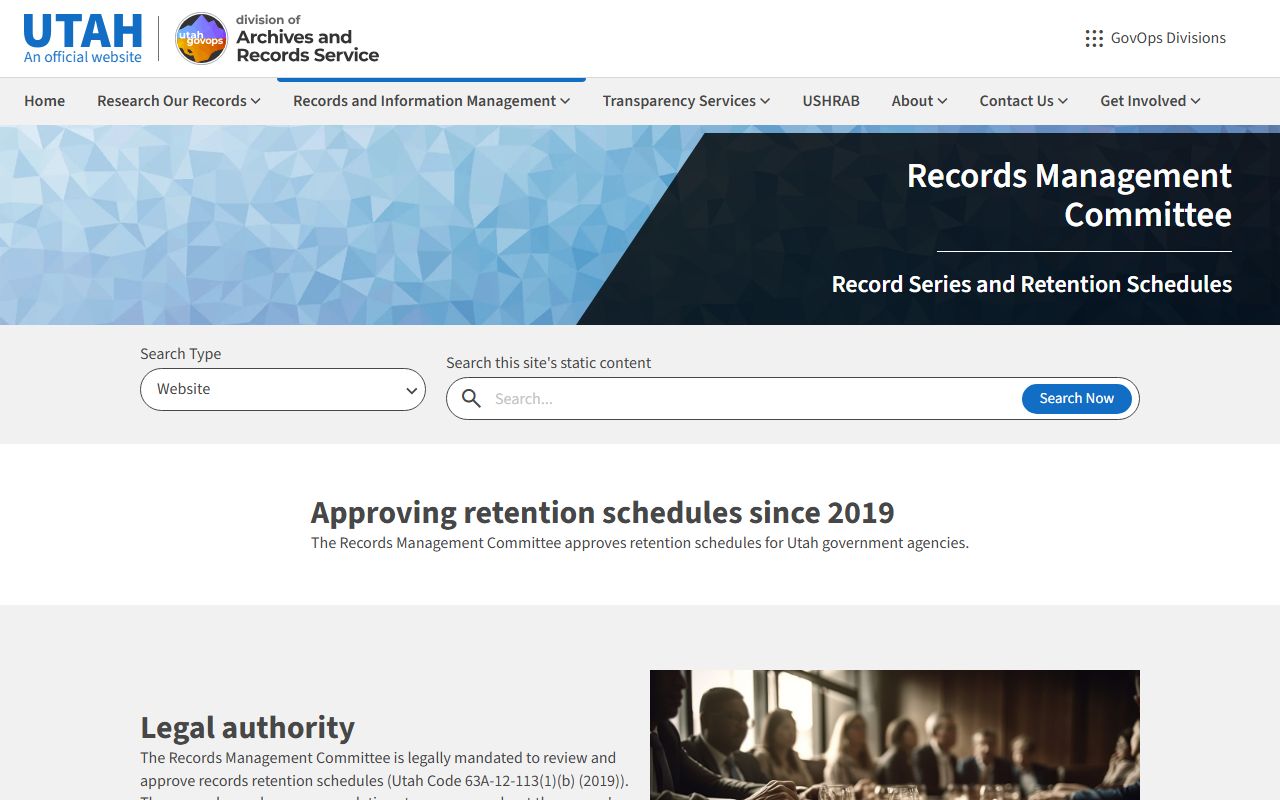
The archive page lists retention rules and links to training for records officers.
Criminal Identification Act Rules
The Criminal Identification Act is the backbone of the Utah Recent Arrests data system. It tells BCI what to collect, what to share, and what to hold back. The law is at Utah Code § 53-10-108. It sets fines for anyone who leaks rap sheet data the wrong way. It also sets up the process for qualifying entities to run a check.
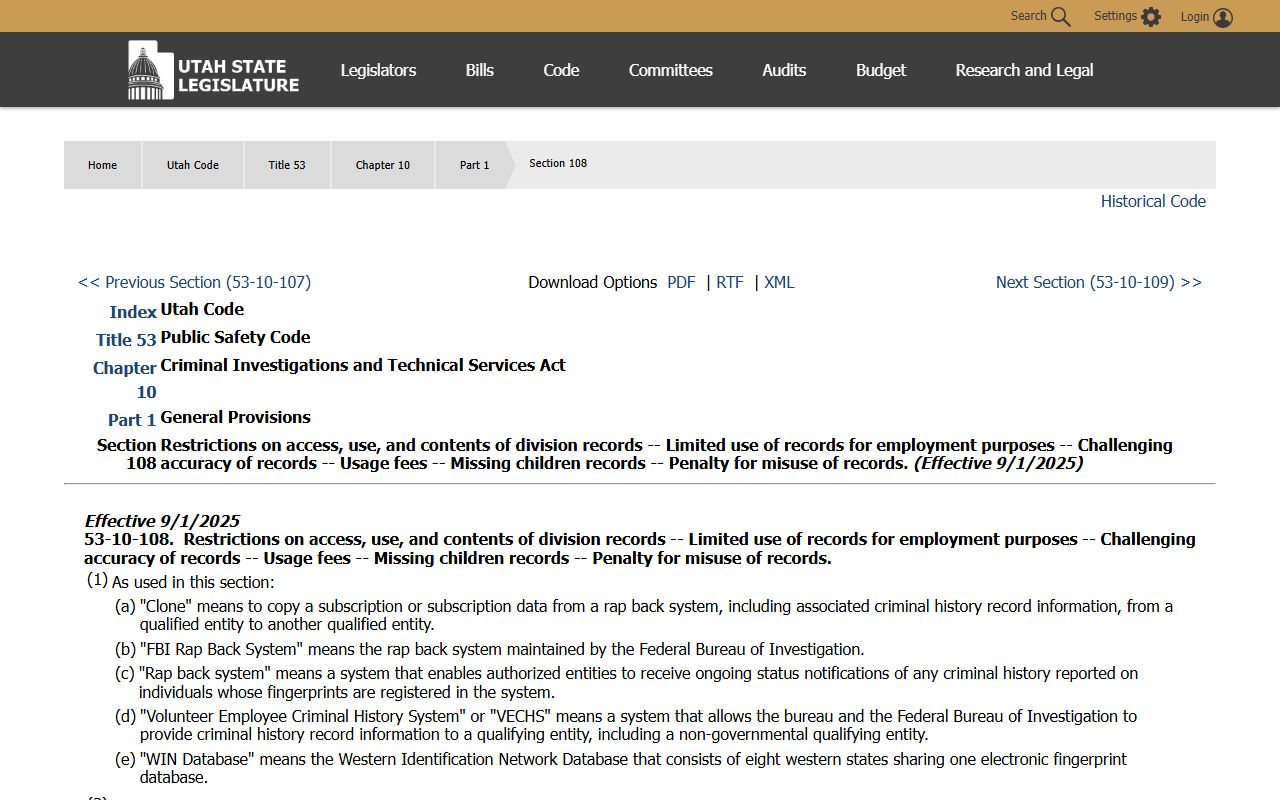
The law page links to all related sections of Title 53 for ease of review.
Open Data and Recent Arrests
The state open data portal holds a range of public datasets that touch on Utah Recent Arrests. These cover crime stats, public safety, and corrections. You can pull files in CSV form for your own work. The main site is at opendata.utah.gov.
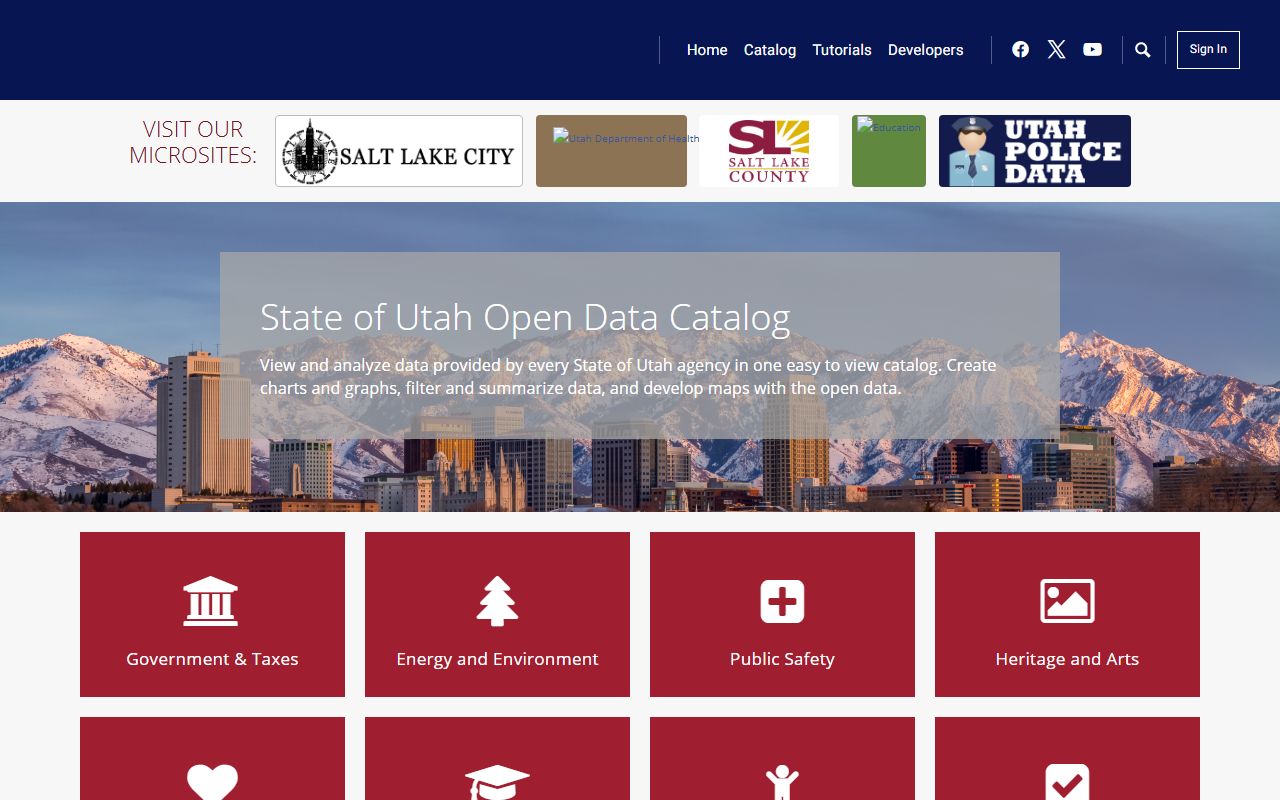
The portal also lets you file a GRAMA request with a state agency and track the reply.
Note: Open data files are not the same as rap sheets, so they will not show a single person by name.
What Is in Utah Recent Arrests Files
A typical Utah Recent Arrests file holds a few core facts. You get the name of the person. You get the date and time of the booking. You get the charge and the code section. You get the bond amount. You get the jail name. Some files list a mugshot. Some list the officer who made the arrest. The full police report may take a GRAMA request to get.
Court files add more depth. Once a case is filed, you see the charge the prosecutor picked, the judge name, the hearing dates, and the case status. A case may end in a plea, a trial, or a dismissal. The file tracks all these steps. The final order sits at the end of the file.
Browse Utah Recent Arrests by County
Each county in Utah keeps its own jail roster and court files. Pick a county below to find local Recent Arrests info, sheriff contact data, and court links.
Utah Recent Arrests by Major City
City police run the booking for most arrests in the bigger towns. Pick a city below to learn about Recent Arrests in that area.